As of September 2026, an applicant with a distributed generation facility of 25kW or below does not need NEPRA concurrence; the relevant distribution company (DISCO) gives the approval. Above 25kW, NEPRA concurrence applies and the notified one-time fee is PKR 1,000 per kW. The fee for 25kW or below is nil.
This guide explains the net metering process in Pakistan using the official 2026 regulations, including eligibility, documents, costs, working-day timelines, LESCO and IESCO considerations, export rates, and how to check whether a NEPRA concurrence is relevant to your system.
It then covers commercial and industrial rooftop solar in depth, because factories, plazas, schools, cold storage units and offices face a different set of constraints from a household.
Is Net Metering Still Available in Pakistan in 2026?
Yes, grid-connected consumers can still export surplus solar electricity, but for new applications the commercial mechanism is now net billing rather than the old one-for-one net-metering framework.
2026 net metering rules for solar users in Pakistan
Question
2026 answer
Why it matters
Can new solar users export to the grid?
Yes, after DISCO approval or NEPRA concurrence where applicable.
A bidirectional metering arrangement records imports and exports.
How are imports billed?
At the applicable consumer tariff.
Your normal tariff still applies to electricity drawn from the grid.
How are exports credited?
At the National Average Energy Purchase Price (NAEPP).
Export value can be lower than the value of self-consumed solar.
Do systems up to 25kW need NEPRA concurrence?
No, after the 6 August 2026 amendment.
The concerned DISCO gives approval.
Do systems above 25kW need NEPRA concurrence?
Yes.
NEPRA concurrence and the applicable fee are part of the process.
Existing consumers can be different. The 2 April 2026 amendment protects valid approvals, licences or concurrences and agreements executed before the new rules took effect, so the earlier rate and billing mechanism continue until the agreement expires.
A material modification that changes maximum electrical output can remove that protection. See the official April amendment (S.R.O. 547(I)/2026).
Be careful with older guides. Many Pakistani solar articles still in circulation describe the 2015 Distributed Generation and Net Metering Regulations as current law, quote a one-for-one export credit of PKR 22-27/kWh, or state a seven-year agreement term. Those descriptions were overtaken during 2026.
Net Metering Application Process in Pakistan (2026 Guide)
The official process starts with the distribution company serving your electricity connection. The sequence below is based on Regulation 3 and the August 2026 amendment.
Step 1: Check whether your connection is eligible
The applicant must be a 3-phase 400V or 11kV consumer in an eligible category. The proposed distributed generation capacity cannot exceed the sanctioned load of the premises. A system of 250kW or above also requires a load-flow study through the licensee or a reputable Pakistan Engineering Council registered consultant.
Step 2: Check local transformer headroom
The DISCO cannot entertain a new application if distributed generation already connected to the relevant distribution transformer has reached 80% of that transformer's rated capacity. This makes an early feasibility check important before equipment is finalised.
Step 3: Complete the site and roof feasibility study
Establish usable shade-free roof area, roof structure condition, cable routes, inverter and switchgear locations, and the daytime load profile. For commercial sites this study decides whether the project is worth pursuing at all, and it is cheaper to discover a constraint now than after equipment is purchased.
Step 4: Prepare the application and technical file
Complete the prescribed application form and attach the required identity, contact, site, system, contractor, one-line diagram and inverter information. Utility-specific checklists may ask for additional supporting documents.
Step 5: Submit the file to your DISCO
The application and supporting documents are submitted to the relevant distribution licensee, such as LESCO, IESCO, FESCO, GEPCO, MEPCO, PESCO, QESCO, HESCO, SEPCO, TESCO, HAZECO or K-Electric.
Step 6: Completeness check
Within five working days of receiving the application, the licensee must acknowledge receipt and tell the applicant whether the file is complete. If information is missing, the applicant has three working days after being informed to provide it.
Step 7: Technical review
Once the file is complete, the licensee carries out its initial review within fifteen working days. If the proposed interconnection is technically infeasible, the reasons must be communicated within three working days after the review is completed.
Step 8: Sign the interconnection agreement
If the requirements are met, the licensee and applicant enter into the prescribed agreement within seven working days.
Step 9: Receive and pay the connection charge estimate
Within seven working days of the agreement, the licensee issues the connection charge estimate for the interconnection facilities, including metering. The prosumer is given seven working days to pay it.
Step 10: DISCO approval or NEPRA concurrence
For systems of 25kW or below, the concerned licensee gives approval. For systems above 25kW, the licensee forwards the case to NEPRA with the agreement, evidence of fee payment and prescribed affidavit; NEPRA may accord concurrence within seven working days after receiving the required documents.
Step 11: Installation and joint inspection
The system is installed and then inspected. Utility staff verify that the installed array, inverter, protection equipment and wiring match the approved technical file. Discrepancies between the paperwork and the installed plant are one of the most common causes of a failed inspection.
Step 12: Metering, commissioning and billing activation
The licensee must install and commission the proposed interconnection facilities within fifteen working days after payment of the demand notice. Billing under the prosumer arrangement begins after the required approval or concurrence is in place and the bidirectional meter is commissioned.
Net Metering Documents Required in Pakistan
The safest way to prepare the file is to separate the official NEPRA form requirements from extra documents that a DISCO may request through its own checklist. The national regulations explicitly require the following core information.
Documents and information required for a solar net metering application in Pakistan
Document / information
Who needs it
Purpose
CNIC copy, or CUIN for a company
All applicants
Identifies the applicant named on the application.
Applicant address, phone and email
All applicants
Contact and correspondence details.
Location of the generation system
All applicants
Identifies the proposed DG site.
Anticipated annual consumption, generation and purchases
All applicants
Provides the energy profile in the standard form.
Nameplate AC rating and connection details
All applicants
Defines system capacity and electrical configuration.
Contractor / installer details
All applicants where installer is used
Identifies the firm responsible for the installation.
One-line diagram / schematic
All grid-connected applications
Shows inverter, protection, metering and interconnection design.
Inverter manufacturer, model, version and serial number
All inverter-based systems
Allows technical review of the exact equipment.
Signed applicant and installer declarations
As applicable
Confirms accuracy of the submitted information.
Interconnection agreement
Required before final interconnection
Sets the rights and obligations of the prosumer and licensee.
Fee evidence and prescribed affidavit
Above 25kW where NEPRA concurrence applies
Supports the application for NEPRA concurrence.
Load-flow study
250kW and above
Assesses network impact of a large distributed generation facility.
In practice, DISCO checklists may also ask for a recent electricity bill, equipment datasheets, proof of installer credentials, ownership or authorised-use documents for the premises, undertakings, and other local forms.
Commercial applicants are frequently asked for company registration documents, board authorisation for the signatory, and tenancy or ownership evidence for the roof. Because these utility-level checklists change, confirm the latest list with the relevant DISCO before submission rather than relying on an old PDF or installer checklist.
Net Metering Cost in Pakistan Explained
There is no single national all-inclusive net metering cost in Pakistan. The official NEPRA fee is only one part of the expense. Metering, connection works, engineering, protection and any network improvements can add to the final amount.
NEPRA concurrence fees by distributed generation facility size in 2026
DG facility size
NEPRA concurrence fee
2026 position
25kW or below
Nil
No NEPRA concurrence required after 6 August 2026; DISCO approval applies.
Above 25kW
PKR 1,000 per kW one-time
NEPRA concurrence applies.
The Prosumer Regulations also make the prosumer responsible for all costs associated with interconnection facilities up to the interconnection point, including the metering installation.
If distribution-system improvements are required solely for the connection, those costs can also fall on the prosumer. If the licensee does not have a suitable meter available, the prosumer may procure one directly, subject to utility testing before installation.
For a small residential project, Luminey's published 5kW system guide uses a broad PKR 25,000-80,000 planning allowance for prosumer/net-billing application work, meter, documentation and service charges.
Treat that as a market-planning allowance, not an official national tariff. Read the 5kW Solar System Price in Pakistan guide for the wider system-cost context.
Costs can rise if you need sanctioned-load enhancement, extra protection, a new meter arrangement, long cable runs, transformer or feeder upgrades, additional engineering studies, or corrections after inspection.
Net Metering Timeline: How Long Does Approval Take?
The regulations do not promise one fixed end-to-end calendar duration. Instead, they set stage-by-stage working-day limits. A clean case can still take several weeks because each stage starts after the previous requirement is satisfied.
Official timelines for each stage of a solar net metering application in Pakistan
Stage
Official timing window
Notes
Application acknowledgement / completeness
Within 5 working days
Applicant gets 3 working days to supply missing information after notice.
Initial technical review
Within 15 working days
Starts after the file is complete.
If technically infeasible
Reasons within 3 working days after review
Application is returned with reasons.
Interconnection agreement
Within 7 working days
After the licensee is satisfied requirements are met.
Connection charge estimate
Within 7 working days
Issued after agreement execution.
Applicant payment
Within 7 working days
Applicant-side action; immediate payment can reduce delay.
NEPRA concurrence above 25kW
Within 7 working days after complete documents
Not required for 25kW or below after 6 August 2026.
Interconnection installation / commissioning
Within 15 working days after demand-notice payment
Subject to the required approval or concurrence for billing activation.
If the main DISCO stages run near their maximum windows, roughly 49 working days of utility processing can be involved from completeness checking through commissioning, before counting applicant corrections, payment delays, extra studies or network upgrades.
For systems above 25kW, NEPRA concurrence has its own seven-working-day window and may overlap with some utility activity.
In calendar terms, plan for roughly six to fourteen weeks for a straightforward case, and longer for large commercial projects that involve sanctioned-load enhancement, a load-flow study, transformer work or repeated inspections.
Meter availability, document corrections and DISCO workload are the usual reasons a project lands at the slower end of that range.
Net Metering Policy Pakistan 2026: Four Rule Changes to Know
Timeline of 2026 changes to solar prosumer and net metering rules in Pakistan
Date
Change
Practical effect
NEPRA Prosumer Regulations, 2026 took effect and repealed the 2015 net-metering regulations.
New arrangements use net billing: imports at applicable tariff, exports at NAEPP.
S.R.O. 547(I)/2026 protected valid pre-existing approvals/licences/concurrences and agreements.
Legacy rate and billing mechanism continue until agreement expiry, unless a material modification changes maximum electrical output.
Fee schedule notified under S.R.O. 709(I)/2026.
Fee is nil for 25kW or below and PKR 1,000/kW above 25kW.
S.R.O. 1330(I)/2026 removed the need for NEPRA concurrence for DG facilities of 25kW or below.
The concerned licensee/DISCO gives approval for small systems.
Because the rules changed more than once during 2026, older articles may still describe a generation licence, a universal PKR 1,000/kW fee, or the earlier net-metering billing mechanism. Always check the latest documents on NEPRA's official Legal page before submitting or calculating payback.
Net Metering Rates in Pakistan Under Net Billing
Under Regulation 14, the DISCO bills electricity supplied to the prosumer at the applicable consumer tariff and credits electricity supplied by the prosumer at the National Average Energy Purchase Price.
NEPRA's power-purchase-price forecast for calendar year 2026 states a National Average Energy Purchase Price of PKR 8.13/kWh. The regulations allow NEPRA to revise the rate during the agreement, so this figure should be treated as the 2026 official forecast reference rather than a permanent lifetime export rate.
Example: if a home exports 180 kWh in a month and PKR 8.13/kWh is the applicable export rate, the export credit is about PKR 1,463. Electricity used directly from solar before it reaches the meter can be more valuable because it avoids buying that electricity at the consumer's applicable retail tariff.
Monthly solar value = self-consumed solar x avoided import cost + exported solar x applicable export credit
This is why Luminey's On-Grid vs Off-Grid Solar guide recommends sizing new grid-connected systems around realistic daytime self-consumption instead of assuming that every exported unit cancels an imported unit one-for-one.
Why the Maths Is Different for Commercial and Industrial Consumers
Most net metering coverage in Pakistan is written for a household with a 5kW or 10kW rooftop. A factory, plaza, school, cold storage unit or office building is a different proposition in four ways.
The tariff you avoid is higher. Commercial and industrial tariffs generally sit above domestic slabs, and many three-phase commercial consumers are on time-of-use metering. Every unit of solar you consume on site avoids purchasing that unit at your applicable commercial rate, so the value of self-consumption scales with your tariff, not with the export rate.
The absolute numbers are larger in both directions. A sizing error on a 5kW house wastes a modest amount of capital. The same proportional error on a 200kW factory array is a materially larger write-off, and an approval delay costs real money in continued grid purchases.
The approval route changes above 25kW. A commercial system almost always crosses the 25kW threshold, which means NEPRA concurrence, the PKR 1,000/kW notified fee, an affidavit and a longer document set. At 250kW and above, a load-flow study is required as well.
Your load shape decides the return. Under net billing, a business that consumes its generation during daylight captures full tariff value. A business whose heavy load runs after sunset exports cheaply during the day and buys expensively at night. This single factor separates a strong commercial solar case from a weak one.
Which businesses gain most under net billing
How well different business types fit solar under net billing in Pakistan
Business type
Typical load shape
Fit under net billing
Single-shift factory, workshop, packaging unit
Heavy daytime load, quiet at night
Strong. Most generation is self-consumed at commercial tariff.
Schools, colleges, training institutes
Daytime load, closed evenings, closed in summer holidays
Good on term days; check holiday months when output exports cheaply.
Offices, banks, software houses
Daytime HVAC and IT load
Strong, provided the site is occupied through the day.
Retail plazas, showrooms
Daytime plus evening trading hours
Moderate. Evening trading is billed at tariff while daytime surplus exports at NAEPP.
Cold storage, ice plants, water pumping
Continuous or thermally driven load
Strong for daytime portion; storage or load shifting improves the night portion.
Two- and three-shift industry
Round-the-clock load
Strong for the daytime share; evening and night load needs storage or remains on grid.
Warehouses with low base load
Small load, large roof
Weakest. A big roof does not help if the sanctioned load and on-site consumption are small.
The pattern is consistent: roof area does not determine value, and neither does your total monthly bill. Daytime consumption does.
Commercial Solar Sizing: Sanctioned Load, Roof Area and Generation
Two hard limits govern commercial system size before any commercial judgement is applied.
Limit 1: sanctioned load. Regulation 3 states the proposed distributed generation capacity must not exceed the sanctioned load of the premises. A plaza with a 60kW sanctioned load cannot install 100kW of solar, whatever the roof allows. Your sanctioned load appears on your DISCO connection documents and bill.
Limit 2: transformer headroom. If distributed generation on your distribution transformer has already reached 80% of its rated capacity, the licensee cannot entertain a new application on that transformer. In dense industrial and commercial areas this is a genuine risk and is worth checking before you commit to a design.
Indicative solar DG capacity, generation and approval route by sanctioned load in Pakistan
Sanctioned load
Maximum DG capacity
Indicative daily generation
Indicative annual generation
Approval route
25kW
25kW
~95-110 units
~35,000-41,000 units
DISCO approval; no NEPRA fee
50kW
50kW
~190-225 units
~69,000-82,000 units
NEPRA concurrence; fee about PKR 50,000
100kW
100kW
~380-450 units
~139,000-164,000 units
NEPRA concurrence; fee about PKR 100,000
150kW
150kW
~570-675 units
~208,000-246,000 units
NEPRA concurrence; fee about PKR 150,000
250kW
250kW
~950-1,125 units
~347,000-411,000 units
NEPRA concurrence plus load-flow study
500kW
500kW
~1,900-2,250 units
~693,000-821,000 units
NEPRA concurrence plus load-flow study
Generation figures above are planning estimates based on roughly 3.8 to 4.5 units per kWp per day across a Pakistani year. Actual yield varies with location, tilt, orientation, shading, soiling, temperature and array losses. Use a site-specific yield estimate for any investment decision.
Roof area. As a planning figure, allow roughly 80 to 100 square feet of usable, shade-free roof per kW for a tilted rooftop array, including walkways and inter-row spacing. A 100kW array therefore needs in the region of 8,000 to 10,000 square feet of usable roof, not total roof. Parapet shadows, water tanks, stair blocks, HVAC plant and cable trays all reduce usable area.
Structure. Confirm the roof can carry the mounting structure and array loads, including wind uplift. On older industrial sheds and on buildings with added floors, a structural assessment before procurement avoids an expensive discovery later.
Sanctioned load enhancement. If your load is genuinely larger than your sanctioned load, enhancing sanctioned load is a separate DISCO process with its own cost and timeline. Start it before the prosumer application rather than in parallel, because the DG capacity you may apply for follows the sanctioned load on record.
Peak and Off-Peak: The Timing Trap in Commercial Solar
This is the point most commercial solar pitches skip, and it matters more under net billing than it did under the old framework.
Many three-phase commercial and industrial consumers are billed on time-of-use tariffs, where evening peak hours carry a higher rate than off-peak hours. Solar generates during the day.
Under net billing, the units you export during the day are credited at NAEPP regardless of when you export them, while the units you import during the evening peak are billed at your applicable peak rate.
The consequence is a widening gap between what an exported unit earns and what an imported unit costs:
Value gap per unit = your applicable import tariff (including peak rates) - NAEPP export credit
A worked illustration, using your own figures rather than ours:
Assume a commercial site consumes 400 units on a working day and the array generates 450 units.
If 320 units are consumed on site and 130 exported, the site avoids buying 320 units at its commercial tariff and earns NAEPP on 130.
If the same site is closed in the afternoon and consumes only 150 units on site, 300 units export at NAEPP and the site still buys its evening load at the peak rate.
The second case has identical panels, identical generation and a materially worse return. Substitute your actual tariff, your actual daytime consumption and the current NAEPP figure to see the real gap for your site, and revisit the system size if the exported share is large.
Three practical responses:
Shift flexible load into daylight where the process allows: pumping, compressed air, batch production, laundry, ice-making, pre-cooling, EV charging and water heating.
Size to daytime load, not to roof area or total bill. Under net billing, the marginal panel that only ever exports earns the lowest rate available to you.
Evaluate storage on the evening peak, not on the export rate. A battery earns its keep by displacing expensive peak imports and covering outages, not by storing units you would otherwise export at NAEPP.
Commercial Solar Cost and Payback in Pakistan
No honest article can give one payback number for all commercial projects. Published market ranges for turnkey commercial solar in Pakistan vary widely by structure type, cable runs, switchgear specification, panel and inverter brand, and site conditions. Rather than repeat a figure you cannot verify, use the method below with your own quotations.
Step 1: establish your avoided cost. Take your last twelve months of bills. Identify your effective commercial tariff per unit, including any time-of-use split between peak and off-peak.
Step 2: estimate self-consumption share. From your load profile, estimate what proportion of solar generation will be consumed on site. A single-shift daytime operation may self-consume 70-90%; a mostly-evening business may self-consume far less.
Step 3: value annual generation in two parts.
Annual saving = (annual generation x self-consumption share x avoided tariff) + (annual generation x export share x NAEPP)
Step 4: total the investment. Include the array, mounting structure, inverter, protection and switchgear, cabling, earthing, civil works, the DISCO connection charge estimate, the NEPRA concurrence fee where applicable, engineering and any load-flow study, plus sanctioned-load enhancement if required.
Step 5: divide. Simple payback in years equals total investment divided by annual saving. For a more careful view, add annual degradation of roughly 0.4-0.7% on generation, allow for cleaning and maintenance, and consider likely tariff movement over the system life.
Commercial and industrial solar cost elements and what they scale with in Pakistan
Cost element
Typically scales with
Notes for C&I buyers
PV modules and mounting
System size (kWp)
Structure cost rises on sheds requiring reinforcement or non-standard rails.
Inverter
System size and phase
Three-phase commercial inverters; check MPPT count for multi-orientation roofs.
Protection and switchgear
System size and site risk
See the protection section below; under-specifying here fails inspections.
Cabling, trays and earthing
Distance from array to inverter to LT panel
Long runs on large sites are a real and often underestimated cost.
DISCO connection charge estimate
Site and metering requirement
Issued by the licensee after the agreement; payable within seven working days.
NEPRA concurrence fee
Total kW, for systems above 25kW
PKR 1,000/kW one-time; nil at 25kW or below.
Load-flow study
Projects 250kW and above
Through the licensee or a PEC-registered consultant.
Sanctioned-load enhancement
Where required
Separate DISCO process, separate cost and timeline.
Two warnings about payback figures circulating online. First, several widely shared tables were calculated on the old one-for-one export credit and have not been reworked for net billing, so they overstate the value of exported units.
Second, a payback band quoted without a stated self-consumption assumption tells you almost nothing, because self-consumption is the largest single variable in the calculation.
Protection and Switchgear: What DISCO Inspection Actually Checks
A commercial application can pass its paperwork review and still fail at inspection if the protection chain is incomplete.
This is one of the most common avoidable causes of delay, and it is also a safety and uptime issue in Pakistani conditions, where monsoon lightning activity, unstable supply voltage and load-shedding reconnection transients all stress equipment.
Protection and safety requirements for grid-connected commercial solar systems in Pakistan
Requirement
What it means in practice
Grid-tie inverter with anti-islanding
The inverter must stop energising the network when supply is lost, so utility staff are not exposed to backfeed. Commonly evidenced against IEC 62116; UL 1741 is also cited for anti-islanding in equipment documentation.
Utility interface compliance
Interconnection behaviour, harmonics and power factor are assessed against standards such as IEC 61727; commercial consumers should confirm power factor performance expected by their DISCO.
Inverter product safety
Evidenced against IEC 62109 for PV inverter safety.
DC-side overcurrent protection
Correctly rated DC breakers or fuses per string. AC-rated devices are not a substitute; they cannot safely interrupt DC fault current.
DC isolator / disconnect
Allows safe isolation of the array for maintenance and emergency work.
AC-side protection
Appropriately rated AC breaker or MCCB at the inverter output and at the interface, sized for the installed capacity.
Surge protection
SPDs on both DC and AC sides, selected for the site's exposure. On large commercial roofs and in lightning-prone regions this is a serious asset-protection measure, not an optional extra.
Earthing and bonding
Array frames, structure, inverter and enclosures correctly bonded and earthed.
Manual disconnect with utility access
Where required, a lockable disconnect that utility personnel can reach safely.
Bidirectional metering
A meter capable of accurately recording flow in both directions, tested and commissioned by the licensee.
One-line diagram matching reality
The submitted schematic must reflect what is actually installed, including protection devices and ratings.
The cost consequence is asymmetric. Protection hardware is a small fraction of a commercial project, while an inverter replacement after a surge event, plus the lost production and lost self-consumption savings during downtime, is not.
On a site where production depends on continuity, specify protection for the site's real exposure rather than to the minimum that might pass an inspection.
Confirm the exact device schedule your DISCO expects for your system size before procurement, because inspection practice varies between utilities and can be updated.
Eligibility Checklist for Commercial and Industrial Applicants
Work through this before you request quotations.
Connection type. The applicant must be a 3-phase 400V or 11kV consumer in an eligible category.
Sanctioned load on record. Proposed DG capacity must not exceed it. Check the figure on your bill or connection documents.
Transformer headroom. Confirm the relevant distribution transformer has not reached the 80% distributed-generation threshold.
Premises rights. Ownership, or documented authority to install on the roof. Tenants should secure landlord consent in writing early; a five-year prosumer agreement outlasts many tenancies.
System type. On-grid or hybrid configurations exporting to the network. A pure off-grid system is not a prosumer arrangement.
Installer credentials. Pakistan's earlier framework required installation through an AEDB-certified installer, and DISCO checklists have commonly asked for installer credentials. Confirm the current requirement and accepted evidence with your DISCO before contracting, since this is a utility-level checklist item rather than a figure fixed in the 2026 regulations.
Corporate documents. Company registration, CUIN, authorised signatory evidence and board authorisation where applicable.
Load-flow study. Required at 250kW and above, through the licensee or a PEC-registered consultant.
Budget for the full connection cost. The connection charge estimate, concurrence fee, metering and any network improvement attributable to your interconnection.
LESCO Net Metering in Lahore 2026: What Applicants Should Know
For a Lahore consumer, the national NEPRA rules above still govern the commercial and technical framework, while LESCO handles the local application, review, agreement, connection estimate, metering and approval process within its service territory.
Before applying in Lahore, check four items first:
Your connection is three-phase and the proposed solar capacity does not exceed sanctioned load.
Your local transformer has enough distributed-generation headroom under the 80% rule.
The installed inverter, protection and one-line diagram match the submitted technical file.
You know whether your system is 25kW or below, because that determines whether DISCO approval alone is sufficient or NEPRA concurrence is required.
Do not rely on an old LESCO net-metering fee screenshot or pre-February 2026 guide without checking the current utility checklist. National fee and concurrence rules changed during 2026, while local connection charges and meter costs can still vary by case.
IESCO Net Metering Guide Pakistan: Same NEPRA Rules, Different Utility
IESCO applicants in Islamabad and Rawalpindi follow the same Prosumer Regulations, sanctioned-load limit, transformer-capacity rule and net-billing mechanism. The difference is the distribution company processing the local application and interconnection.
For systems above 25kW that require NEPRA concurrence, NEPRA publishes concurrence records by utility. You can review the NEPRA IESCO net-metering/concurrence listings for publicly posted cases. For 25kW or below after 6 August 2026, the relevant approval is with the DISCO rather than NEPRA concurrence.
NEPRA Net Metering License and Online Check: What to Look For
The search phrase NEPRA net metering license is now partly outdated for ordinary small systems. In the 2026 framework, the important terms are DISCO approval and NEPRA concurrence rather than a universal residential generation licence.
25kW or below: NEPRA concurrence is required after the 6 August 2026 amendment; check application/approval status with your DISCO.
Above 25kW: NEPRA concurrence applies; public concurrence entries are published on NEPRA utility-specific net-metering pages.
If you have a pre-9 February 2026 agreement, check the agreement date, expiry date and whether any material system modification has been made before assuming the old billing mechanism still applies.
NEPRA's public pages, such as the GEPCO concurrence listing, show concurrence numbers, application numbers, dates and applicant names for cases that require NEPRA action.
Net Metering Solutions: What Your Solar System Needs Before Approval
A successful application is not only paperwork. The solar system also has to be designed for safe parallel operation with the grid.
A grid-connected inverter that meets the applicable interconnection and anti-islanding requirements.
A one-line diagram that matches the actual installed equipment and protection arrangement.
A manual disconnect device where required, with safe access for utility personnel.
Bidirectional metering capable of accurately recording electricity flow in both directions.
Correct AC/DC protection, isolation, earthing and cable sizing for the installed capacity.
System settings that match the approved capacity; unapproved extension can trigger compliance issues and, for legacy agreements, affect protected billing treatment.
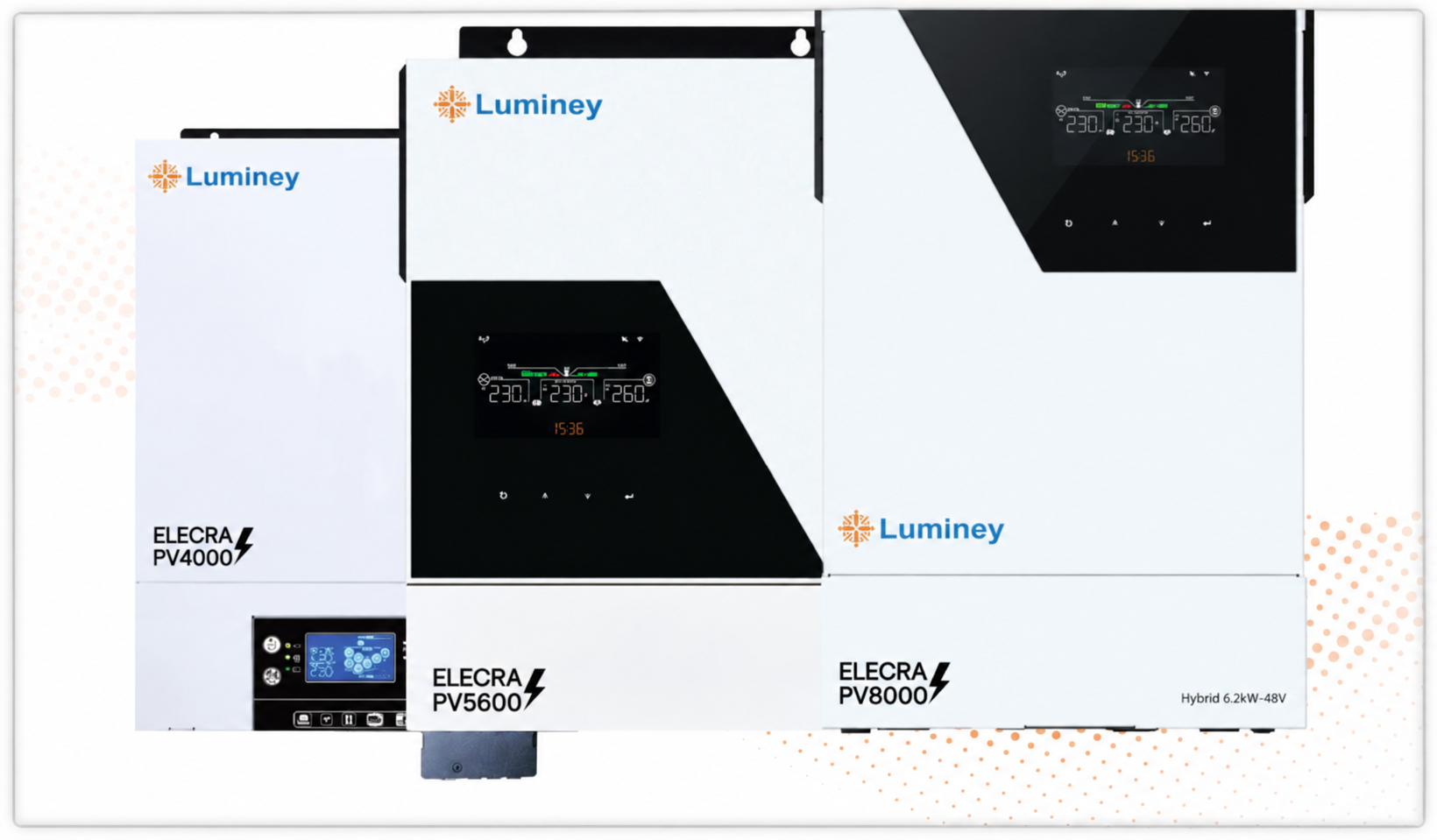
Luminey's on-grid G2 Pro and G3 ranges are designed for grid-connected applications, while Elecra is the hybrid line for projects that also require battery backup. Review the Luminey product range and confirm the exact model, phase, protection settings and utility acceptance before purchasing equipment for export.
Luminey C&I and High-Voltage Products for Systems Above 25kW
Commercial and industrial projects sit on the other side of the 25kW threshold, so equipment selection has a direct effect on the application route, the concurrence fee and the technical review.
A 50kW factory rooftop, for example, needs NEPRA concurrence and attracts the notified PKR 1,000/kW one-time fee, which works out at about PKR 50,000 for that system size, in addition to the DISCO's own connection and metering charges.
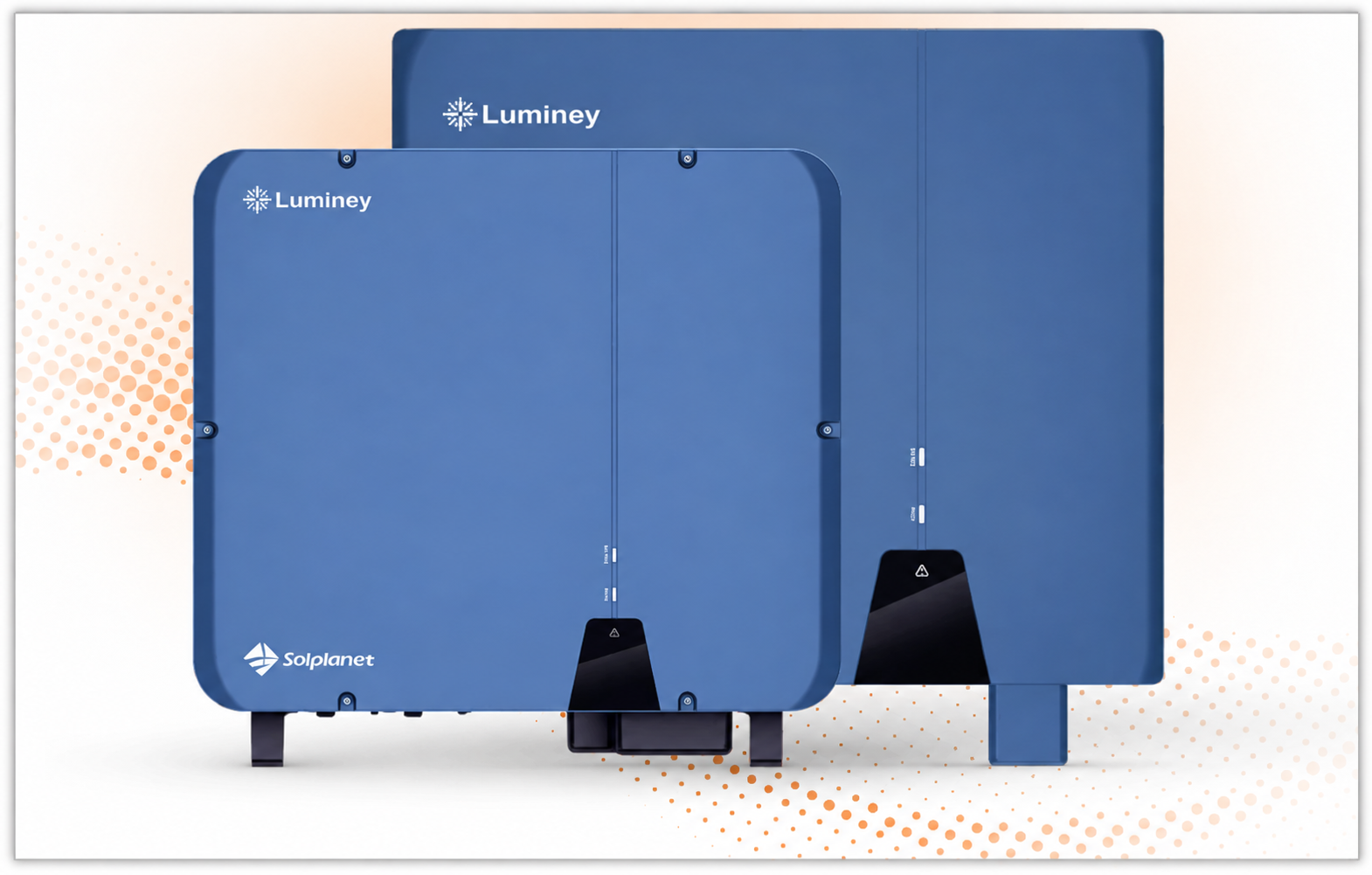
Luminey's commercial line covers both sides of a C&I installation: the three-phase on-grid inverter that actually exports to the network, and the high-voltage battery platforms that raise daytime self-consumption and hold the site up during load-shedding.
Inverter and battery products, specifications and where they fit in a solar prosumer project
Product
Category
Headline specifications
Where it fits in a prosumer project
G3
Three-phase on-grid inverter
30kW, 40kW and 50kW models; up to 98.6% maximum efficiency; 150% PV oversizing (45kWp/60kWp/75kWp maximum array); 1100V maximum input; 3 MPPTs on 30/40kW and 5 on 50kW; IP66; RS485 with Wi-Fi, LAN or 4G
The export-side inverter for commercial rooftops above 25kW, where NEPRA concurrence applies.
Oasis Flex
Indoor C&I high-voltage battery
Eight capacities from 25kWh to 60kWh; 256V to 614.4V rated voltage range; 0.5C rated and 1C maximum charge/discharge; scalable to 360kWh; natural cooling; IP20 indoor; CAN/RS485/Wi-Fi/Ethernet
Indoor plant rooms and offices that need modular capacity growth alongside a grid-connected system.
Oasis 60
Outdoor C&I high-voltage battery cabinet
Model CIESS 60; 60kWh rated energy from 12 packs; 614.4V rated (537.6-691.2V range); 1C maximum C-rate; up to 6 cabinets for 360kWh; air-conditioned cooling; IP55; 715 x 890 x 2140mm, 807kg
Factories and yards with no indoor space, where a weather-rated pre-assembled cabinet is easier to deploy.
SunESS H
High-voltage battery for homes and light commercial
SunESS 5H, 10H, 15H and 20H; 5/10/15/20kWh nominal (4.5/9/13.5/18kWh usable); 400V rated, 350-450V range; >95% roundtrip efficiency; 10kW charge and discharge; up to 3 systems for 60kWh; indoor or outdoor IP55
Smaller commercial premises and larger homes that stay under the 25kW DISCO-approval band.
Luminey's Commercial and Industrial energy storage page lists Oasis Flex as scalable up to 4.2MWh and Oasis 60 up to 3.6MWh across larger multi-cluster deployments, while each product page states 360kWh for a single connected cluster. Confirm the exact target configuration with Luminey before finalising a large project design.
Why high-voltage matters on a commercial prosumer application
Fewer strings, lower current. A 614.4V battery platform moves the same energy at lower current than a 48V bank, which reduces cable sizing, busbar cost and conversion losses on a large site.
Certification evidence for the technical review. G3 is certified to IEC 62109, IEC 62116 anti-islanding, IEC 61727 utility interface and EN 50549 grid-connection requirements, which are exactly the areas a DISCO examines before approving parallel operation. Oasis Flex and Oasis 60 carry IEC 62619, CE and UN38.3, with Oasis 60 adding IEC 62477.
Design headroom without breaching sanctioned load. G3 accepts a PV array up to 150% of rated AC output, so a site can capture more morning and evening generation while the DG facility rating declared on the application stays within the sanctioned load.
Self-consumption is where net billing pays. Because exports are credited at NAEPP rather than at your retail tariff, a commercial battery that shifts solar into evening or shift-work hours often earns more than sending the same units to the grid.
Modification rules still apply. The inverter model, version and serial number you declare must match what is installed, and adding capacity later needs fresh approval or concurrence. Plan the expansion path, with Oasis Flex or Oasis 60 cabinets, before the first submission rather than after commissioning.
Storage is not a requirement for exporting solar to the grid. It is a commercial decision about outage cover, load shifting and the gap between your import tariff and the export credit. Explore the Luminey Commercial and Industrial energy storage range and the G3 on-grid inverter, or speak to the team about a site-specific configuration.
How a Net Metering System Can Save on Electricity Bills
A grid-connected solar system can still reduce electricity bills after the 2026 policy change, but the economics now reward self-consumption more strongly than export-heavy sizing.
To improve value under net billing:
Run air conditioners, pumps, washing machines and other flexible loads during strong solar-production hours where practical.
Size the PV array from real daytime consumption, not only roof area or the maximum inverter input.
Use monitoring to compare solar generation, self-consumption and export rather than looking only at total monthly generation.
Consider battery storage when outage backup or evening energy shifting justifies the extra cost; a battery is not required simply to export solar to the grid.
Common Reasons Applications Are Delayed or Rejected
Applies to all applicants
Proposed DG capacity exceeds the sanctioned load on the premises.
The relevant distribution transformer has already reached the 80% distributed-generation threshold.
The application is incomplete or missing the prescribed one-line diagram, equipment information or signatures· The installed system does not match the submitted technical design.
The meter or interconnection equipment is unavailable and an approved alternative has not been arranged.
The applicant changes inverter capacity or other technical parameters after approval without obtaining the required fresh approval/concurrence.
More common on commercial and industrial projects
Incomplete protection chain at inspection: missing SPDs, DC isolator, or DC-rated overcurrent devices.
Inverter that does not evidence the expected interconnection and power-factor behaviour.
A 250kW-or-above project submitted without the required load-flow study.
Sanctioned-load enhancement started late, or in parallel with the prosumer application instead of before it.
Premises rights unclear on leased roofs, or the signatory lacking documented authority for the company.
Grid saturation in dense industrial estates, requiring network improvements the prosumer must fund where they are incurred solely for that interconnection.
Phased expansion carried out without fresh approval or concurrence for the added capacity.
The most reliable way to reduce delay is to finalise the electrical design, sanctioned load and inverter model before submitting the file, then keep the installed system identical to the approved technical documents.
Get Your Grid-Connected Solar System Ready
Net billing makes correct system sizing, inverter selection and daytime energy use more important than ever. Before buying an on-grid or hybrid system, confirm your sanctioned load, phase, roof capacity, expected daytime consumption, outage requirements and the latest DISCO approval checklist.
Luminey supports grid-connected and solar-plus-storage applications across residential, commercial and industrial use cases, from the G2 Pro and Elecra range for homes to G3 inverters and Oasis high-voltage storage for larger sites.
How to apply for net metering in Pakistan in 2026?
Apply through the distribution company that serves your electricity
connection. Confirm three-phase eligibility and sanctioned load, prepare
the prescribed application and technical documents, complete the DISCO
review and agreement, pay the connection charge estimate, then obtain
DISCO approval for 25kW or below or NEPRA concurrence for systems above
25kW before final commissioning and billing activation.
What documents are required for the net metering process in Pakistan?
The NEPRA standard application asks for applicant identity and contact
details, DG location, energy estimates, AC nameplate rating, contractor
details, one-line diagram, inverter manufacturer/model/version/serial
number and signatures. Above 25kW, the concurrence package also includes
the agreement, fee evidence and prescribed affidavit. Your DISCO may
request additional local documents, and commercial applicants are often
asked for company and premises documentation.
What is the net metering cost in Pakistan for a 5kW home system?
There is no fixed national turnkey fee. For 25kW or below, the NEPRA
concurrence fee is nil. The homeowner still pays applicable
interconnection and metering costs, plus any engineering, documentation,
protection or utility-specific charges. Luminey uses PKR 25,000-80,000
as a broad planning allowance for prosumer/net-billing
application-related work in its 5kW cost guide.
How long does net metering approval take in Pakistan?
There is no single statutory total. The Prosumer Regulations set stage
windows including 5 working days for completeness checking, 15 for
initial review, 7 for the agreement, 7 for the connection estimate and
15 after payment for installation/commissioning. In calendar terms, plan
for roughly six to fourteen weeks for a clean case, and longer where
load enhancement, a load-flow study or network upgrades are involved.
What is the net metering policy in Pakistan in 2026?
New applicants operate under the NEPRA Prosumer Regulations, 2026 and
net billing. Imported electricity is billed at the applicable tariff and
exported electricity is credited at the National Average Energy Purchase
Price. Valid pre-9 February 2026 agreements are protected under the
April amendment until expiry, subject to the rules on material
modification.
What are the net metering rates in Pakistan in 2026?
For new prosumer arrangements, exports are credited at the National
Average Energy Purchase Price. NEPRA's calendar-year 2026 power-purchase
forecast lists NAEPP at PKR 8.13/kWh. The Authority can revise the rate,
so always check the latest notification and your actual bill. Treat
older articles quoting PKR 22-27/kWh export credit as describing the
superseded framework.
Do I need a NEPRA net metering license for a 10kW solar system?
Under the 6 August 2026 amendment, a DG facility of 25kW or below does
not need NEPRA concurrence; the concerned DISCO gives approval. The
older phrase "NEPRA net metering license" is therefore misleading for a
normal 10kW residential system under the current rules.
How can I do a net metering license online check?
For systems above 25kW that require NEPRA concurrence, NEPRA publishes
concurrence records on utility-specific net-metering pages. For 25kW or
below after 6 August 2026, check approval or application status with the
relevant DISCO because NEPRA concurrence is not required.
Where can I download the NEPRA net metering rules PDF?
Use NEPRA's official Legal page and open the National Electric Power
Regulatory Authority (Prosumer) Regulations, 2026, together with the
April, April-fee and August amendments. Avoid relying on an older 2015
net-metering PDF for a new 2026 application.
Can I apply for net metering on a single-phase connection?
The 2026 Prosumer Regulations define an applicant as a 3-phase 400V or
11kV consumer. A single-phase household should confirm the required
three-phase conversion or load upgrade with its DISCO before applying.
Can my solar system be larger than my sanctioned load?
No. Regulation 3 states that the proposed distributed generation
capacity must not exceed the sanctioned load of the premises. If you
need a larger solar system, address sanctioned-load requirements before
filing the prosumer application.
What happens if my local transformer has reached the solar limit?
The licensee cannot entertain a new application if connected distributed
generation on that transformer has reached 80% of its rated capacity.
Network improvements may be required, and the regulations make the
prosumer responsible for costs incurred solely for its interconnection
where applicable.
What is the term of a prosumer agreement?
The 2026 regulations set a five-year agreement term from commissioning.
It may be renewed for another five-year term by mutual consent, subject
to the rules and commercial framework applicable at that time.
Can I expand my solar system after approval?
A prosumer must obtain fresh concurrence before a modification in
technical parameters where concurrence applies, and the August amendment
adds approval language for small systems. Legacy customers should be
especially careful because a material modification that changes maximum
electrical output can end protected old-rate treatment.
How does commercial net metering differ from residential in Pakistan?
The regulatory framework is the same, but three things change.
Commercial systems usually exceed 25kW, so NEPRA concurrence and the
PKR 1,000/kW fee apply. Commercial tariffs are higher, so self-consumed
solar is worth more per unit. And many commercial consumers are on
time-of-use tariffs, so the gap between evening peak import cost and the
flat NAEPP export credit has a large effect on returns.
What size solar system can a factory install in Pakistan?
Up to its sanctioned load, provided the distribution transformer has
headroom under the 80% rule and the roof can physically and structurally
accommodate the array. Allow roughly 80-100 square feet of usable
shade-free roof per kW as a planning figure, and obtain a site-specific
assessment before committing.
Is a load-flow study required for large solar projects?
Yes. A distributed generation facility of 250kW or above requires a
load-flow study conducted through the licensee or a reputable Pakistan
Engineering Council registered consultant.
What protection equipment does a DISCO check at inspection?
Expect scrutiny of the grid-tie inverter's anti-islanding and
interconnection compliance, DC-side overcurrent protection, DC
isolation, AC-side protection sized to the installation, surge
protection on both DC and AC sides, earthing and bonding, any required
manual disconnect, and whether the installed arrangement matches the
submitted one-line diagram. Confirm the exact device schedule with your
DISCO before procurement.
Do I need an AEDB-registered installer to apply?
Pakistan's earlier framework required installation through an
AEDB-certified installer, and DISCO checklists have commonly required
installer credentials. This is a utility-level checklist item rather
than a requirement fixed in the 2026 regulations, so confirm the current
requirement and the accepted evidence with your DISCO before signing an
installation contract.
Which Luminey products suit a commercial system above 25kW?
For the export side, the G3 three-phase on-grid inverter is available in
30kW, 40kW and 50kW models with up to 98.6% maximum efficiency, 150% PV
oversizing and IP66 protection. For storage, Oasis Flex covers 25kWh to
60kWh indoors (IP20) and Oasis 60 is a 60kWh outdoor high-voltage cabinet
(IP55), both scalable to 360kWh.
Do I need a high-voltage battery to apply for net metering?
No. Exporting solar to the grid requires a compliant grid-connected
inverter, correct protection and a bidirectional metering arrangement,
not a battery. High-voltage storage such as Oasis Flex, Oasis 60 or
SunESS H is a commercial choice for outage cover and for shifting solar
into hours when it offsets your retail tariff instead of earning the
lower NAEPP export credit.