
August 13, 2026
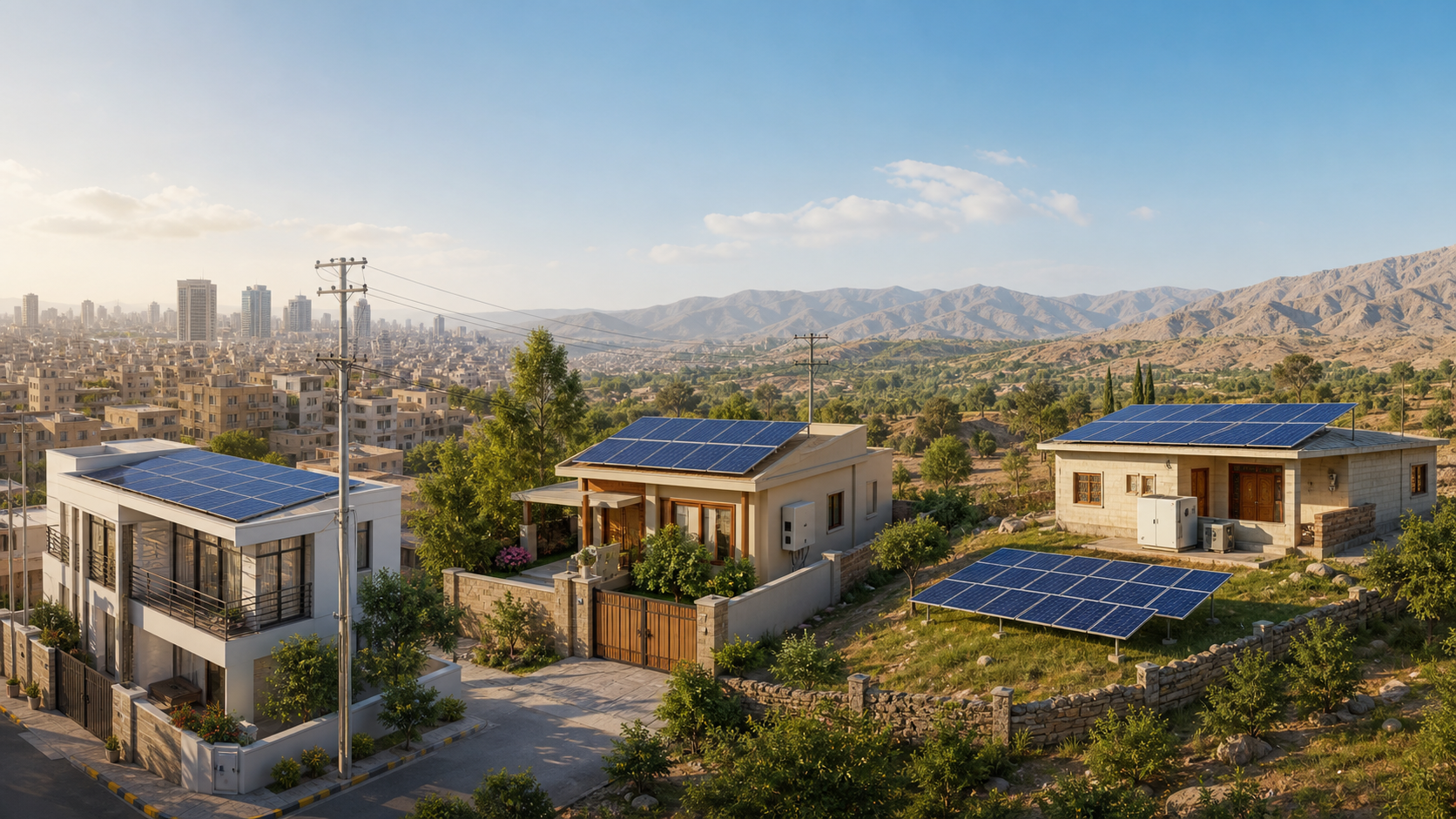
On-grid solar is usually best for the lowest upfront cost and daytime bill savings. Off-grid solar is designed for locations without a dependable utility connection. For most grid-connected Pakistani homes that also need load-shedding backup, a hybrid solar system is the more practical middle path.
The right answer to On-Grid vs Hybrid vs Off-Grid Solar Comparison depends on more than panel size. A useful decision must consider your sanctioned load, daytime consumption, outage duration, critical appliances, battery budget, roof space, and eligibility under Pakistan's current prosumer rules.
This guide compares all three architectures, explains the 2026 net-billing context, estimates battery runtime, and gives a homeowner checklist that can be used before requesting quotations.
The main difference is what stabilizes the home's electricity supply when solar production changes. An on-grid system relies on the utility grid. An off-grid system relies on batteries and careful energy management. A hybrid system can coordinate solar, batteries, and the grid.
An on-grid solar system connects a grid-tied inverter to the utility supply. Solar energy serves active loads first. A shortfall comes from the grid, while eligible surplus can be exported through an approved metering arrangement.
A standard on-grid inverter must stop supplying power when the grid fails. This anti-islanding protection prevents the solar system from energizing utility lines while technicians may be working on them.
An off-grid solar system operates without depending on the utility grid. Solar panels power loads and charge a battery bank. The batteries supply energy after sunset, during clouds, and whenever demand exceeds current solar production.
Off-grid reliability is not automatic. It depends on enough panel capacity, usable battery energy, inverter power, seasonal design margin, and disciplined load management. Many sites also keep a generator or another charging source for prolonged low-sun periods.
A hybrid system combines grid connectivity with battery management. Depending on the inverter and configuration, solar can serve loads, charge storage, limit exports, or send approved surplus to the grid. During an outage, a backup output can power selected circuits from solar and batteries.
Hybrid is not the same as unlimited whole-house backup. The backup output, battery power, battery energy, wiring, and selected essential-load panel all set practical limits.
See what are the updated prices for Solar Inverters in Pakistan.
Pakistani homes often need two separate outcomes: lower electricity purchases and continuity during load shedding. On-grid solar handles the first outcome efficiently. Off-grid solar can handle the second without utility support, but at a much higher storage cost. Hybrid solar can balance both outcomes.
The phrase "works during load shedding" needs qualification. A hybrid inverter still requires a correctly wired backup or EPS output, suitable transfer behavior, and enough battery power. Some hybrid models can support limited solar operation without a battery, but this must be confirmed for the exact model and firmware.
Pakistan's economics changed when NEPRA notified the Prosumer Regulations, 2026 on 9 February 2026. New arrangements use net billing, which values imported electricity at the applicable retail tariff and exported electricity at the national average energy purchase price determined under the regulations.
The practical result is simple: a solar unit used inside the home can be worth more than the same unit exported. Self-consumption, load scheduling, and appropriately sized storage therefore matter more for new applicants than they did under a one-for-one energy-offset assumption.
NEPRA later clarified the transition for existing consumers. A valid agreement executed under the repealed regulations before the new rules took effect continues under the earlier rate and billing mechanism until that agreement expires. Consumers should verify the agreement date and expiry on their documents rather than relying on general online advice.
Use this planning formula before choosing an inverter architecture:
Monthly energy value = self-consumed solar units x avoided import cost + exported units x applicable export credit
For example, if a home generates 600 units, uses 420 units directly, and exports 180 units, most of the financial value may come from the 420 self-used units. The actual calculation must use the tariff, taxes, time-of-use treatment, and export rate shown by the relevant DISCO or K-Electric.
The NEPRA Prosumer Regulations, 2026 also frame a prosumer as an eligible applicant with a three-phase 400 V or 11 kV connection. Proposed capacity cannot exceed the sanctioned load and remains subject to the regulations and distribution-company process. Confirm current requirements before buying equipment for export.
The most useful distinction is where each extra unit goes.
This energy-flow difference affects return on investment. On-grid avoids battery cost but cannot protect against outages. Hybrid spends more on control and storage but can increase self-consumption and protect selected circuits. Off-grid must pay for enough storage and generation to survive the worst expected conditions.
An on-grid inverter is grid-following. It synchronizes its voltage and frequency with the utility and stops when the grid disappears. An off-grid inverter is grid-forming. It creates a stable local supply from solar and batteries without needing a live utility reference.
Do not compare on grid vs off grid solar inverter by kW alone. Check rated continuous output, surge capability, MPPT voltage and current, phase configuration, battery voltage, BMS communication, backup transfer time, export-control support, IP rating, and local warranty service.
There is usually no special "on-grid panel" or "off-grid panel." The same photovoltaic module can be used in either system when its voltage, current, connectors, and string design match the inverter and site conditions.
The array design changes by architecture for off-grid vs on-grid:
An off-grid array that looks adequate in summer may be undersized in winter, during dust accumulation, or after several cloudy days. Proper design uses local production estimates, shading analysis, temperature-adjusted string voltage, and a defined autonomy target.
A standard on-grid inverter stops during load shedding even in bright sunlight. A hybrid or off-grid inverter can continue only if the installation supports islanded operation and the available solar plus battery power can carry the connected loads.
Whole-house backup can accidentally connect an iron, electric geyser, pump, oven, and several air conditioners to the battery at once. An essential-load panel limits backup to selected circuits such as lights, fans, refrigerator, internet, security equipment, and one planned air conditioner.
Separating critical loads can reduce the required battery size, protect the inverter from overload, and extend backup time. Heavy loads can remain on non-backup circuits or operate only when solar production is strong.
On-grid is better for a grid-connected property with reliable electricity and a primary goal of reducing bills at the lowest capital cost. Off-grid is better when a usable grid connection does not exist. Hybrid is usually better when a Pakistani home wants both bill reduction and practical load-shedding protection.
For most city homes, the real comparison is on-grid versus hybrid, not on-grid versus true off-grid. Keeping the grid as a backup avoids buying enough batteries for every night, winter shortfall, and long cloudy period.
Off-grid is often the correct choice when extending the grid is unavailable or costs more than a properly designed independent system. Critical sites should include redundancy, remote monitoring, spare-part planning, and a secondary charging source.
On-grid solar wins when the decision is based on upfront affordability, simple maintenance, and daytime savings. Removing batteries lowers capital cost, reduces conversion losses, and eliminates storage replacement from the initial plan.
On-grid does not win every use case. Its main weakness is complete dependence on a live utility reference. If outages interrupt work, comfort, medical equipment, internet, or security, the financial cost of downtime can justify a hybrid system.
The strongest on-grid candidate has a dependable grid, substantial daytime consumption, suitable three-phase service for the intended prosumer route, and no requirement for outage backup. The strongest hybrid candidate values continuity and can size storage around essential loads rather than the whole house.
.png)
The off-grid solar system price in Pakistan depends mainly on usable battery capacity, not only panel or inverter kW. A true off-grid design normally needs more panels and more storage than a hybrid system with the same peak load because there is no routine grid fallback.
Market guides reviewed in mid-2026 show wide installed ranges. A 5 kW hybrid system with about 5 kWh of lithium storage is commonly advertised around PKR 700,000 to PKR 1,100,000.
A 10 kW hybrid system with about 10 kWh is advertised around PKR 1,400,000 to PKR 2,500,000. A true off-grid package can cost more when it includes 15 to 30 kWh of storage, array oversizing, generator integration, and heavier protection.
These are budgeting references, not Luminey prices or guaranteed market quotations.
Equipment quality, city, roof structure, cable length, battery chemistry, protection, taxes, warranty, and installation scope can move the total substantially.
Battery kWh measures energy. Inverter kW and battery BMS current limit power. A battery can have enough energy for several hours but still be unable to start or sustain a heavy appliance.
Use this planning formula:
Backup hours = nominal battery kWh x usable depth of discharge x conversion efficiency / average backup load kW
The table below uses a 90% usable depth of discharge and 90% conversion efficiency. Actual limits must come from the current battery and inverter documents.
Air-conditioner demand changes with temperature, insulation, room size, set point, compressor speed, and maintenance. Measure real consumption during hot weather before promising AC backup.
A home using 12 kWh after sunset does not automatically need a 12 kWh battery. The design must account for allowable depth of discharge, inverter losses, battery temperature, ageing, reserve state of charge, and the number of low-sun days the system must survive.
For critical sites, an installer should model at least the worst expected season and document what happens when the energy budget is exceeded.
Choose on-grid when the grid is dependable, the household uses substantial power during solar hours, and the priority is the lowest-cost bill reduction. Confirm the current prosumer economics before oversizing an array mainly for export.
Choose hybrid when essential loads must survive outages or when storage can shift solar energy into expensive evening hours. Size the battery around measured essential energy, not the number of bedrooms or the inverter label.
Choose off-grid when the utility connection is absent or functionally unusable. Design for seasonal production, battery autonomy, load control, and a contingency source. Off-grid should be engineered as a small power system, not sold as a panel package.
Luminey supports both grid-connected solar and solar-plus-storage projects for Pakistani homes and businesses.
Its current range creates a practical selection path: G2 Pro for smaller on-grid installations, G3 for larger grid-connected sites, Elecra for hybrid and backup-focused designs, and Monawall, Atrix, or SunESS H where compatible battery storage is required.
The right combination depends on the property's electrical phase, daytime consumption, sanctioned load, roof capacity, outage pattern, essential loads, and required backup time.
The table below is a starting point, not a substitute for a site survey or written compatibility check.
The Luminey G2 Pro range includes 10kW, 15kW, and 20kW on-grid models. It is a logical option when the main objective is to offset daytime electricity use and the property does not require battery backup from the same inverter.
Luminey lists up to 150% PV oversizing, ShadeSol management, and app-based monitoring for this range.
A higher inverter rating is not automatically better. The final G2 Pro model should be selected against the approved electrical connection, load profile, roof layout, module string design, voltage limits, and applicable interconnection rules.
Because a standard on-grid system shuts down during a grid failure, households with frequent load shedding should compare it with an Elecra-based hybrid design before deciding.
The Luminey G3 range covers 30kW, 40kW, and 50kW on-grid applications. It is better aligned with factories, warehouses, commercial buildings, farms, and institutions that have meaningful daytime demand and enough usable roof or ground area. Luminey highlights app monitoring, water and dust resistance, easy setup, and a five-year warranty for the range.
For a commercial buyer, inverter capacity should follow interval load data wherever possible. A site that exports heavily at midday may produce a different financial result from one that consumes most solar generation instantly. Review transformer or connection limits, phase balancing, protection equipment, export treatment, downtime risk, and future expansion before approving the design.
.png)
The Elecra PV4000, PV5600, and PV8000 models are the relevant Luminey path when backup is part of the requirement. Published features include built-in Wi-Fi, app monitoring, dual output, short-circuit protection, a maximum PV input of 8,000W, and maximum PV voltage of 500VDC. Dual output can help an installer separate priority loads from less important circuits, subject to the final electrical design.
Choose among the Elecra models by calculating peak simultaneous load, starting current, daily essential-load energy, PV array size, and desired backup hours. For example, lights, fans, internet equipment, a refrigerator, and selected sockets may form an essential-load circuit, while electric geysers, large air conditioners, and heavy pumps may remain outside backup to control battery cost.
Never assume that any battery will work with any hybrid inverter. Confirm the exact Elecra model, battery voltage, battery management system communication, firmware, approved battery list, protection devices, and warranty terms before purchase.
Luminey's storage range addresses different installation needs:
Monawall is a wall-mounted option for homes where floor space is limited. Luminey publishes an IP65 enclosure, built-in Wi-Fi, 1C discharge, 100% depth of discharge, and 6,000 cycles. Actual usable backup time still depends on battery capacity, inverter efficiency, load, temperature, and configured reserve.
Atrix suits modular storage plans and projects that may expand later. Luminey states that the range can scale up to 120kWh and supports 0.5C or 1C charging and discharging, depending on configuration. This can be useful for larger residences and light-commercial sites, but cabinet layout, cable sizing, protection, ventilation, and compatible inverter limits must be engineered as one system.
SunESS H is a high-voltage lithium iron phosphate option offered in 5kWh, 10kWh, 15kWh, and 20kWh configurations. Luminey positions it for optimized grid-tied and off-grid use and lists built-in protection, DC-to-DC conversion, and an integrated display. High-voltage storage requires trained installation and strict compliance with the manufacturer's design and commissioning instructions.
Battery nameplate capacity is not the same as guaranteed backup duration. A site assessment should estimate usable battery energy after reserve settings and conversion losses, then test it against both average consumption and short peak loads.
To receive a more accurate recommendation, share:
A recent electricity bill and, for businesses, interval or hourly consumption data if available
Your city, property type, electrical phase, sanctioned load, and meter arrangement
Clear roof dimensions, orientation, shading details, and photographs
A list of essential appliances with wattage and expected hours of use during outages
Typical load-shedding duration and the longest backup period you want to cover
Whether the priority is bill reduction, backup, energy independence, or future expansion
Existing generator, UPS, solar panels, inverter, or batteries that may need integration
Review the Luminey product range, compare Luminey hybrid inverters, explore residential energy storage, or contact Luminey for a site-specific proposal. Ask for the selected model numbers, single-line diagram, expected solar yield, backup assumptions, protection schedule, warranty terms, and compatibility confirmation in writing before installation.