When comparing on grid vs off grid solar in Pakistan, the right choice depends on whether your priority is lower electricity bills, backup during load shedding, or reliable power without a utility connection.
On-grid solar usually offers the lowest upfront cost and strong daytime savings, but a standard system stops working when the grid fails. Off-grid solar operates independently, although the batteries and additional panels required for dependable power make it more expensive.
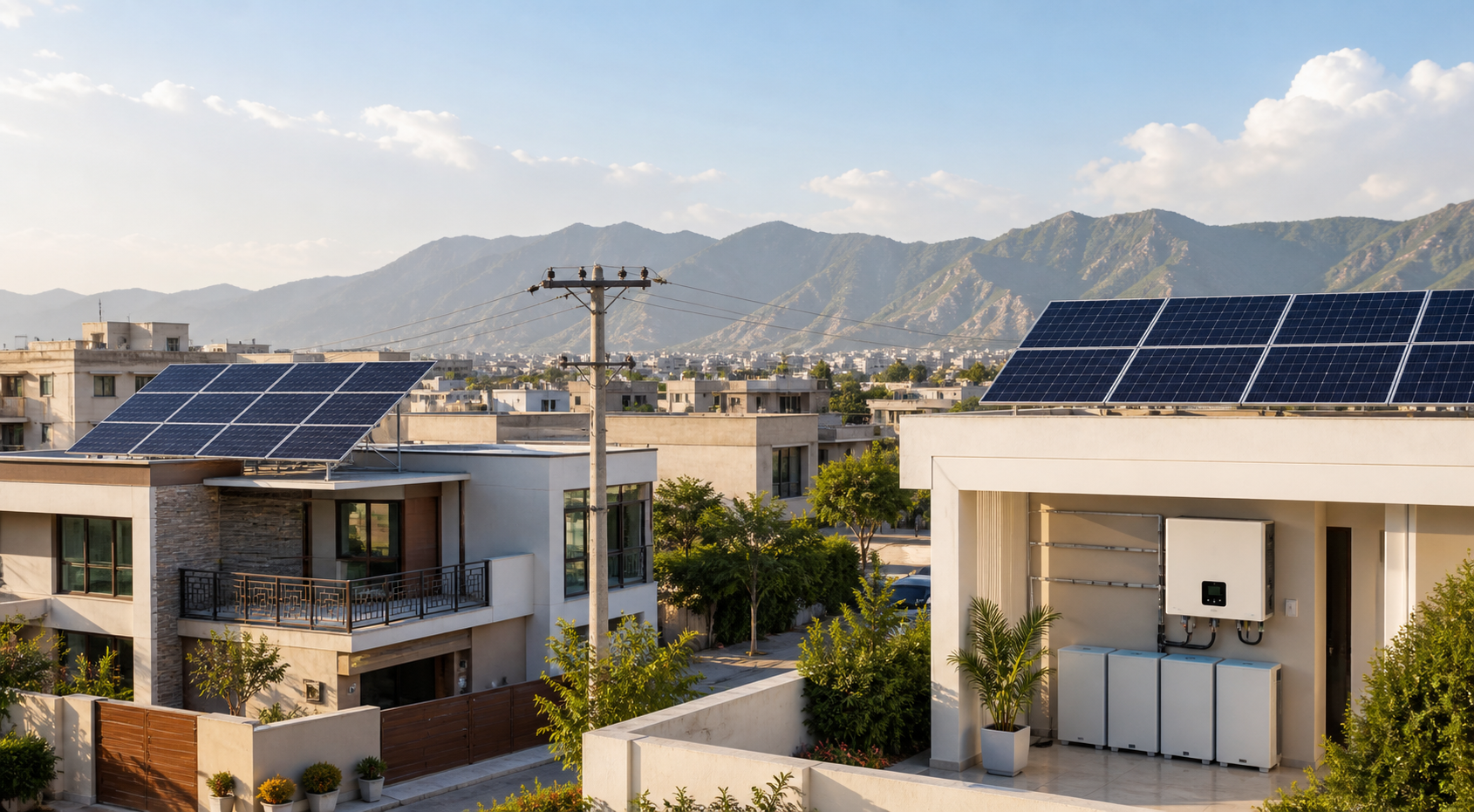
For many grid-connected Pakistani homes, hybrid solar provides a practical middle ground by combining solar savings with battery backup for essential loads.
This guide compares on-grid, off-grid, and hybrid solar systems, including inverter differences, battery sizing, costs, net-billing considerations, and the questions you should ask before choosing a system.
Hybrid Solar Inverter Price in Pakistan 2026 | Updated Today: What the Quote Includes
The phrase hybrid solar inverter price usually means the inverter hardware only. A low number can look attractive because the quote may exclude the battery, solar panels, breakers, surge protection, mounting structure, cables, labor, commissioning, and any meter or approval work.
Inverter only: power electronics, monitoring interface, and the seller's stated warranty.
Battery ready: the inverter can work with a compatible battery, but the battery is usually sold separately.
Hybrid package: may include an inverter and battery, but panels and installation may still be excluded.
Complete system: should itemize panels, inverter, storage, structure, protections, wiring, labor, testing, and documentation.
Ask every seller for an itemized bill of materials. Compare like with like, especially battery chemistry and capacity, PV string design, protection devices, warranty type, and installation scope.
Single Phase Hybrid Solar Inverters Price in Pakistan
The reviewed 10KW single phase hybrid inverter price in Pakistan spans approximately PKR 295,000 to PKR 520,000.
Single-phase models are common for homes and smaller offices with a compatible connection. Current examples include Fox, SAJ, CoreTech, GoodWe, Inverex, Knox, and SunSaviour models.
A single-phase label does not automatically mean easier approval, stronger backup, or lower total cost.
Confirm the property's service connection, the inverter's rated and backup output, maximum current, supported battery list, and the current requirements of the relevant DISCO and NEPRA before purchase.
10KW 3 Phase Hybrid Inverter price in Pakistan
In the reviewed sample, selected 10kW three-phase hybrid listings were around PKR 420,000 to PKR 480,000.
Examples included Inverex Fronius SYMO GEN24 at PKR 420,000, Solis L Plus at PKR 420,000, and Hoymiles LV at PKR 480,000.
Three-phase systems are useful when the building already has three-phase service, loads are distributed across phases, or the interconnection design requires it.
The installer must balance backed-up circuits across phases and verify whether backup power is available on all phases or only a dedicated essential-load output.
10KW Hybrid Solar Inverter (IP66): Is the Higher Rating Worth It?
An IP66 enclosure offers stronger dust and water-ingress protection than indoor-focused enclosures.
Current 10kW IP66 examples include CoreTech NextGen and Solis L Plus, while the SunSaviour Alpha product page also specifies IP66. A higher rating can help in dusty, humid, or semi-outdoor locations.
IP66 does not make poor installation acceptable. Keep the inverter shaded, ventilated, accessible for service, above flood level, and away from corrosive chemicals.
Follow the manufacturer's clearance, temperature, cable-gland, and mounting instructions so the enclosure rating and warranty remain meaningful.
How many AC can run on a 10kW solar system?
A properly designed 10kW system can often run about three to five efficient 1-ton inverter ACs, two to three 1.5-ton inverter ACs, or one to two 2-ton units during strong solar production.
The exact answer depends on each AC's measured input, weather, base load, battery power, and inverter backup limits.
Typical running input and planning ranges for inverter air conditioners
AC type
Typical running input
Planning range
Important condition
1-ton inverter AC
0.8 to 1.4kW
3 to 5
Keep other loads modest and check hot-weather consumption.
1.5-ton inverter AC
1.2 to 2.0kW
2 to 3
Three units can exceed the limit during peak heat.
2-ton inverter AC
1.8 to 2.8kW
1 to 2
Allow extra margin for compressor ramp-up and other loads.
Use the AC nameplate or a clamp-meter reading, not tonnage alone. Reserve roughly 20 to 30 percent capacity for heat, motor starts, and load changes. A 10kW inverter cannot deliver 10kW from an undersized battery during an outage, even when the AC output rating is 10kW.
10kW Solar System Price in Pakistan
A 10kW Solar System | Price in Pakistan Complete Guide 2026 is not the same as a 10kW solar system price.
These estimates a complete 10kW system at roughly PKR 1.4 million to PKR 2.2 million in 2026, with premium battery-backed systems reaching about PKR 2.8 million or more.
Treat these as planning figures, not fixed offers.
Indicative 2026 prices and verification details for 10kW solar inverter and system options
Scope
Indicative 2026 price
What to verify
10kW hybrid inverter only
PKR 295,000 to 520,000
Observed accessible listings on 4 August 2026
Complete 10kW system without premium storage
PKR 1.4m to 2.2m
Indicative estimate published by PV.com.pk
Premium system with lithium backup
Up to PKR 2.8m+
Capacity, chemistry, brand, and installation change the total
The same estimates 35 to 50 units of daily production for a 10kW array, depending on sunlight, location, panel efficiency, shading, temperature, and design. Your installer should model monthly generation, not promise a fixed daily figure.
Hybrid vs On-grid Solar Invertor
A 10KW Solar Inverter price in pakistan: Hybrid vs On-grid manages solar, grid, and compatible battery storage, while an on-grid inverter usually shuts down during a grid outage unless a separate backup architecture exists.
Some category pages mix both types, so confirm the exact model and datasheet before comparing prices.
Comparison of inverter types, outage operation, battery support, and best use
Inverter type
Works during outage?
Battery support
Best fit
Hybrid
Yes, with compatible storage and backup wiring
Usually yes
Homes or businesses needing outage backup and energy shifting
On-grid
Usually no during grid failure
No
Lowest-cost bill reduction where grid reliability is acceptable
Off-grid
Yes
Required for stable operation
Locations without a reliable utility connection
Which is the best hybrid solar inverter in Pakistan?
The best hybrid solar inverter is the model that matches the electrical connection, peak and surge load, PV strings, approved battery, operating environment, and service network.
Price alone cannot establish reliability. A technically correct mid-priced inverter with local parts and warranty support can outperform an incompatible premium unit.
Solar inverter buyer priorities, recommended features, and their importance
Buyer priority
What to prioritize
Why it matters
Lowest initial price
Verified warranty, genuine stock, service access
Low price loses value if downtime or replacement is slow.
Whole-home backup
Backup output, surge rating, transfer time, battery discharge power
Rated AC output may differ from backup output.
Dusty or semi-outdoor site
IP65 or IP66 plus thermal design
Enclosure rating and ventilation both matter.
Three-phase property
Phase compatibility and balanced backup design
A single-phase inverter may not suit the connection or loads.
Future battery expansion
Approved battery list, LV or HV architecture, parallel limits
Battery voltage and BMS communication must match.
Best 10KW Hybrid Inverter price in Pakistan: Seven Checks Before Buying
Match the phase. Confirm single-phase or three-phase service, backed-up circuits, and current interconnection requirements.
Separate rated output from backup output. Check continuous power, surge duration, maximum current, transfer time, and essential-load limits.
Validate the PV design. Confirm maximum PV power, MPPT voltage window, string current, short-circuit current, and the number of MPPTs.
Validate the battery. Match low-voltage or high-voltage architecture, chemistry, BMS communication, charge current, discharge current, and usable energy.
Plan for heat and dust. Check enclosure rating, derating temperature, fan or passive cooling, clearances, and placement.
Read the warranty terms. Confirm warranty length, replacement versus repair, registration, installer requirements, exclusions, and the nearest service center.
Demand an itemized quote. List model numbers, quantities, protections, cable sizes, labor, delivery, commissioning, documentation, taxes, and completion dates.
How to Future-Proof a 10kW Hybrid Installation
Future questions usually appear after the inverter is installed: Can the battery expand? Can a generator connect? Can heavy loads be isolated? Can PV capacity increase? Will monitoring work without the cloud? The answers depend on ports, firmware, approved accessories, current limits, and system architecture.
Leave space in the distribution board for essential-load circuits and future protection devices.
Choose battery capacity from required overnight kilowatt-hours, not from inverter capacity alone.
Confirm generator input and automatic start support if a generator is part of the backup plan.
Record firmware, serial numbers, approved battery models, commissioning settings, and warranty registration.
Review current NEPRA and DISCO rules before relying on export credits or a new prosumer application.
Luminey presents hybrid inverters, residential storage, product information, and support resources on its website. A soft next step is to have the load profile, phase, roof layout, and backup target reviewed before requesting a final quotation.
Luminey Hybrid Inverters: Solar Plus Storage Options in Pakistan
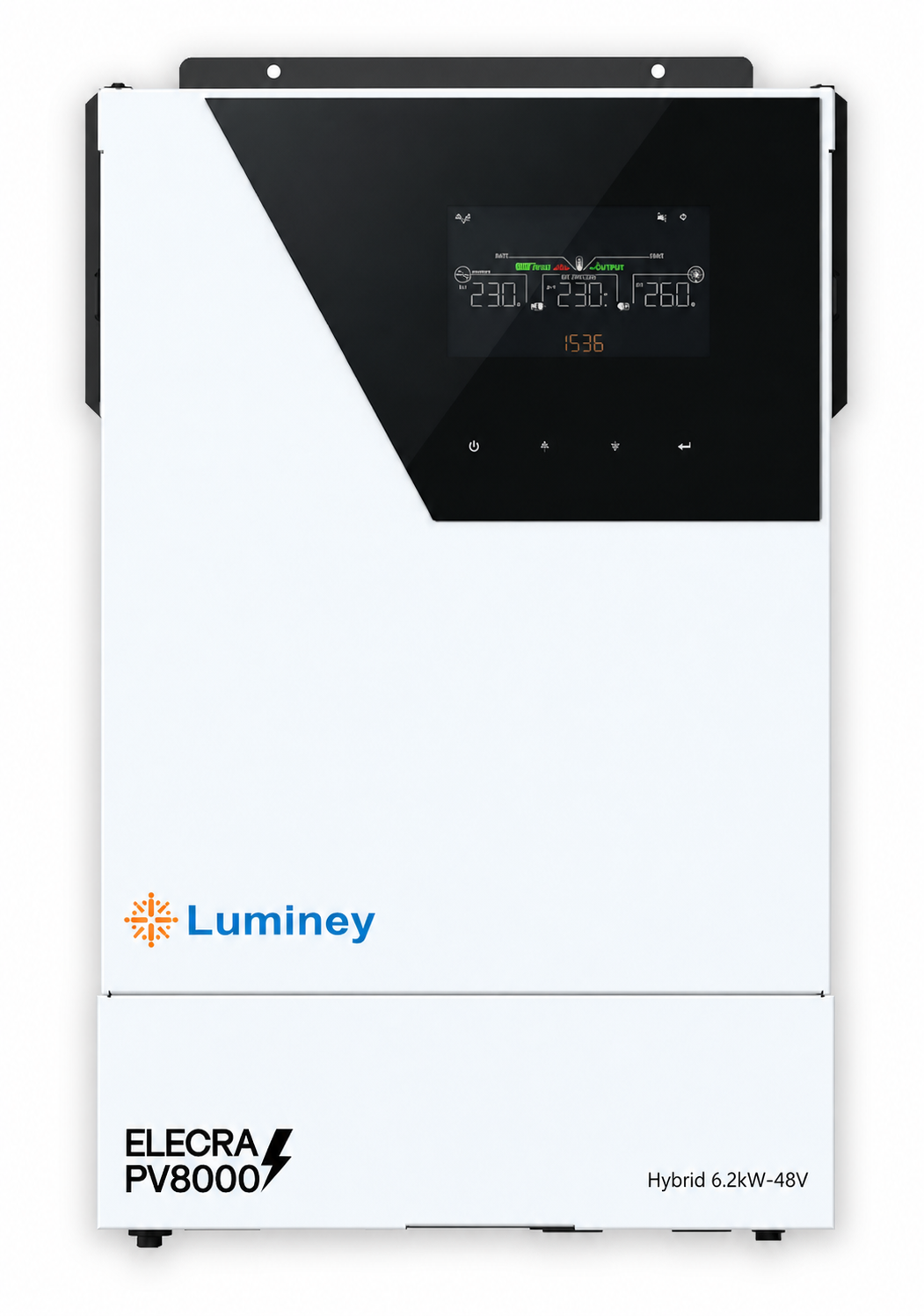
Luminey's current Elecra hybrid inverter lineup includes the PV4000, PV5600, and PV8000 models.
The range is designed for homes and smaller offices that want solar generation, battery-ready operation, essential-load control, and app-based monitoring in one energy-management platform.
Published Luminey product information lists a maximum PV voltage of 500VDC, maximum PV input up to 8000W, built-in Wi-Fi and app monitoring, short-circuit protection, and dual output across the Elecra range. Buyers should still check the exact model datasheet because output power, charging current, PV limits, and supported batteries can differ between models.
Which Luminey hybrid inverter suits your load?
PV4000: Consider this model for smaller essential-load circuits after a measured load assessment.
PV5600: Consider this model when the planned backup load sits between entry-level and higher-capacity residential requirements.
PV8000: Consider this model for larger residential or small-office backup loads that remain within the model's confirmed continuous and surge limits.
Pairing Luminey inverters with energy storage
Luminey also lists Atrix, Monawall, and SunESS H residential energy-storage options. Atrix is presented as scalable up to 120kWh, Monawall as IP65 and scalable up to 80kWh, and SunESS H in 5kWh, 10kWh, 15kWh, and 20kWh capacities.
Do not assume every battery works with every inverter. Confirm the published compatibility sheet, battery voltage, BMS communication, charge current, and warranty conditions before ordering.
After-sales access is another practical buying factor. Luminey publishes customer-care locations in Lahore, Multan, Islamabad, Faisalabad, and Peshawar, plus a central support number.
Confirm the current warranty registration and service process for the selected model before installation.
What is the price of a 10kW hybrid solar inverter?
As of 4 August 2026, reviewed 10kW hybrid inverter listings in
Pakistan ranged from about PKR 295,000 to PKR 520,000. The price
normally covers the inverter only. Battery storage, solar panels,
protection equipment, installation, delivery, and approval work are
usually separate.
How much is a 10kW hybrid inverter?
A practical August 2026 budget is roughly PKR 300,000 to PKR 500,000
for the inverter alone. Premium, three-phase, high-voltage, IP66, or
longer-warranty options can cost more. Always compare the exact model,
phase, backup output, battery compatibility, and warranty terms.
How many AC can run on a 10kW solar system?
A 10kW system can often support three to five efficient 1-ton inverter
ACs or two to three 1.5-ton units during strong solar production.
Actual capacity depends on measured AC input, other household loads,
heat, inverter backup output, battery discharge power, and safety
headroom.
Which is the best hybrid solar inverter in Pakistan?
The best model matches your phase, peak load, surge demand, PV strings,
approved battery, environment, and local service network. Compare
datasheets and warranty processes, not brand names alone. A compatible
inverter with strong after-sales support is usually the safer long-term
choice.
Should I buy a single-phase or three-phase 10kW inverter?
Choose the inverter phase that matches the property connection, load
distribution, backup design, and current approval requirements.
Single-phase models suit many homes, while three-phase models suit
three-phase properties and balanced commercial loads. Have a qualified
designer confirm the connection before purchase.
Can a 10kW hybrid inverter work without a battery?
Some 10kW hybrid inverters can operate with solar and grid power before
a battery is added, but features vary by model. Backup during a grid
outage usually requires compatible storage. Confirm batteryless
operation, export control, black-start behavior, and warranty conditions
in the exact datasheet.
Does the inverter price include solar panels and batteries?
Usually not. Published 10kW hybrid inverter prices generally cover the
inverter hardware only. Request an itemized quotation for panels,
battery capacity, structure, DC and AC protection, cables, labor,
monitoring, commissioning, delivery, taxes, and any meter or approval
work.
What battery size is suitable for a 10kW inverter?
Battery size depends on required backup energy, not inverter power
alone. Multiply essential-load kilowatts by required backup hours, then
allow for usable depth of discharge and conversion losses. Also confirm
the battery can deliver the inverter's required continuous and surge
power.
How long will a battery run a 10kW load?
A nominal 10kWh battery cannot usually run a 10kW load for a full hour
after losses and reserve limits. Runtime equals usable battery energy
divided by average load. For example, 8.5kWh usable energy at a 4kW load
is roughly two hours before other losses.
Is an IP66 10kW hybrid inverter worth buying?
IP66 is valuable for dusty, humid, or semi-outdoor installations because
the enclosure has stronger ingress protection. The inverter still needs
shade, ventilation, correct cable glands, safe clearances, and service
access. Buy the higher rating when the installation environment
justifies the added cost.
How many solar panels are needed for a 10kW system?
A nominal 10kW array needs about 18 panels at 580W, 19 panels at 550W,
or 20 panels at 500W. Final string count depends on the inverter's
maximum PV power, MPPT voltage range, string current, roof layout,
shading, and local design conditions.
Can a 10kW hybrid inverter support net metering?
Many hybrid inverters can export energy, but eligibility depends on the
exact certified model, connection, meter, protection settings, and
current NEPRA and DISCO rules. Verify the latest prosumer requirements
before buying because technical and commercial rules can change after
an inverter is selected.
What is the difference between 10kW and 10kVA?
Kilowatts measure real power, while kilovolt-amperes measure apparent
power. At a power factor of 1.0, 10kVA equals 10kW. With a lower power
factor, usable real power is lower. Check both ratings and the allowed
leading or lagging power-factor range.
What warranty should a 10kW inverter have?
Look for a written manufacturer or authorized-distributor warranty with
clear repair or replacement terms. Verify duration, registration
deadlines, installation requirements, exclusions, transport costs,
response time, parts availability, and service-center locations. A
longer headline warranty is weak if the local claim process is unclear.
Should I choose a 10kW or 12kW hybrid inverter?
Choose 12kW only when measured peak load, future appliances, PV
expansion, phase design, and battery power justify it. Oversizing adds
cost and may create approval or operating issues. A correctly loaded
10kW inverter with adequate PV and storage can be the better-value
system.
Conclusion: Compare the Whole System, Not Just the Sticker Price
The 10kw inverter price in pakistan is only the first number in the buying decision. A useful comparison includes phase, backup behavior, PV input, battery architecture, enclosure rating, thermal performance, monitoring, warranty, service, and complete installation scope. Use the August 2026 snapshot as a starting point, then request a model-specific, itemized quotation.
For a softer brand next step, review Luminey's hybrid inverter, energy storage, and support pages, then ask for a solution matched to your measured load and backup target.

.png)